Industrial Real Estate: Trends and Strategies
The industrial real estate market is stabilizing with balanced supply and demand, powered by e-commerce growth and strategic investments. Discover key trends, top submarkets, and smart strategies shaping 2025’s resilient, opportunity-rich landscape.


Investment Opportunities in a Stabilizing Industrial Market
Investment opportunities in the industrial real estate sector remain robust as the market transitions from a period of rapid expansion to one of stabilization and balance. The sector’s fundamentals are normalizing, with supply and demand moving into closer alignment after several years of outsized growth. E-commerce continues to drive demand, while real estate investment trusts (REITs) adjust to moderating growth rates and shifting investor sentiment. As we move through 2025, investors are seeking clarity on where the best risk-adjusted returns can be found, especially in light of evolving market dynamics and the increasing importance of strategic adaptability.
Industrial Real Estate Trends: Market Vacancy Rates and Performance
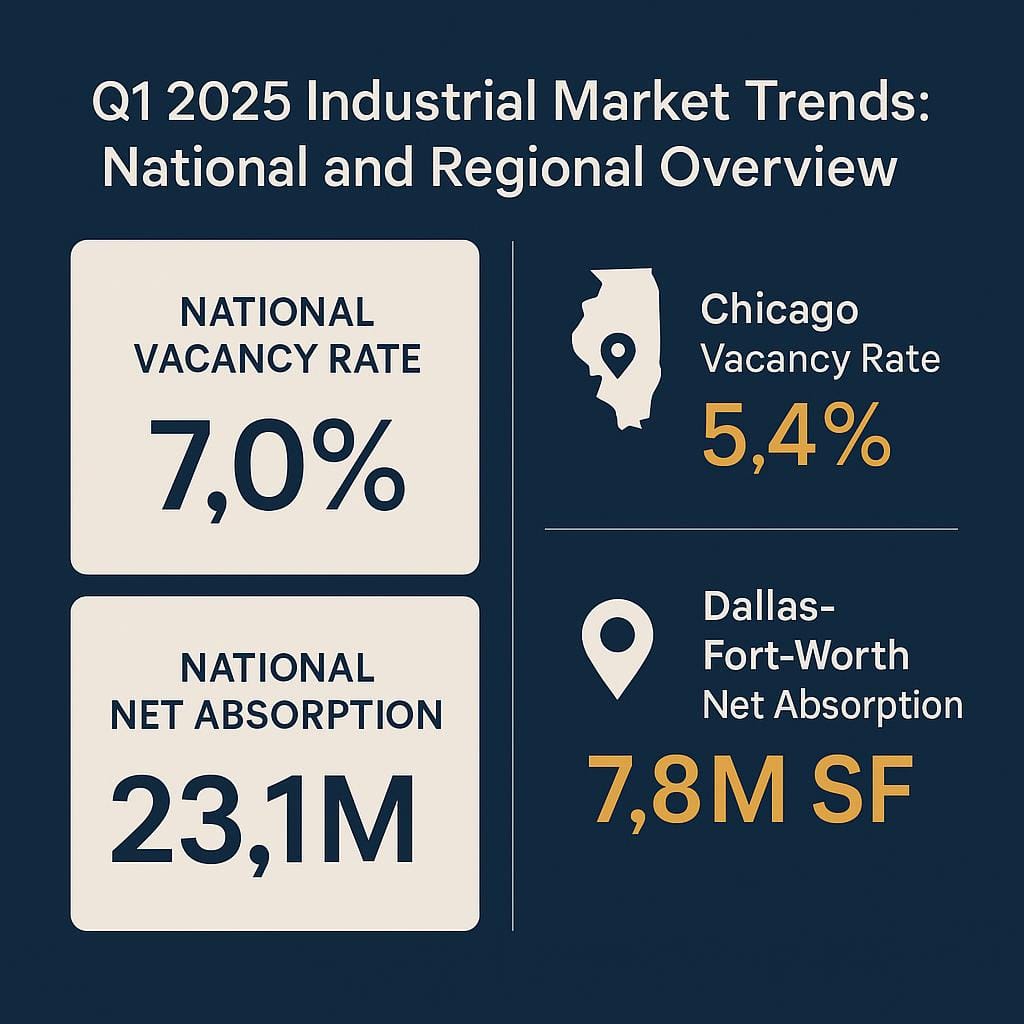
The industrial real estate sector is experiencing a pivotal year, marked by a shift toward more balanced market vacancy rates and moderated absorption levels. As of Q1 2025, the national industrial vacancy rate stands at 7.0%, up from 6.0% at the end of 2024, reflecting a gradual return to historical averages and a more normalized supply-demand equilibrium. Net absorption for Q1 2025 reached 23.1 million square feet, mirroring the same period in 2024 but significantly below the pre-pandemic quarterly average of 80 million square feet. This moderation is further underscored by regional variations:
- Chicago: Vacancy rate at 5.4%, with net absorption of 1.4 million sq ft.
- Dallas-Fort Worth: Vacancy rate decreased to 9.2%, net absorption of 7.8 million sq ft.
- Inland Empire: Vacancy rate declined to 8.5%, net absorption of 3.4 million sq ft.
- Houston: Vacancy rate at 6.8%, net absorption of 1.0 million sq ft.
These figures highlight the sector’s resilience, with most markets achieving stability despite increased supply and shifting tenant demand. Macroeconomic factors such as higher interest rates and cautious corporate expansion have contributed to this stabilization. Importantly, new construction starts are at multi-year lows, which should help prevent oversupply and support fundamentals through 2025 and beyond.
E-commerce Logistics Demand: Impact of E-commerce Growth on Industrial Real Estate Investment
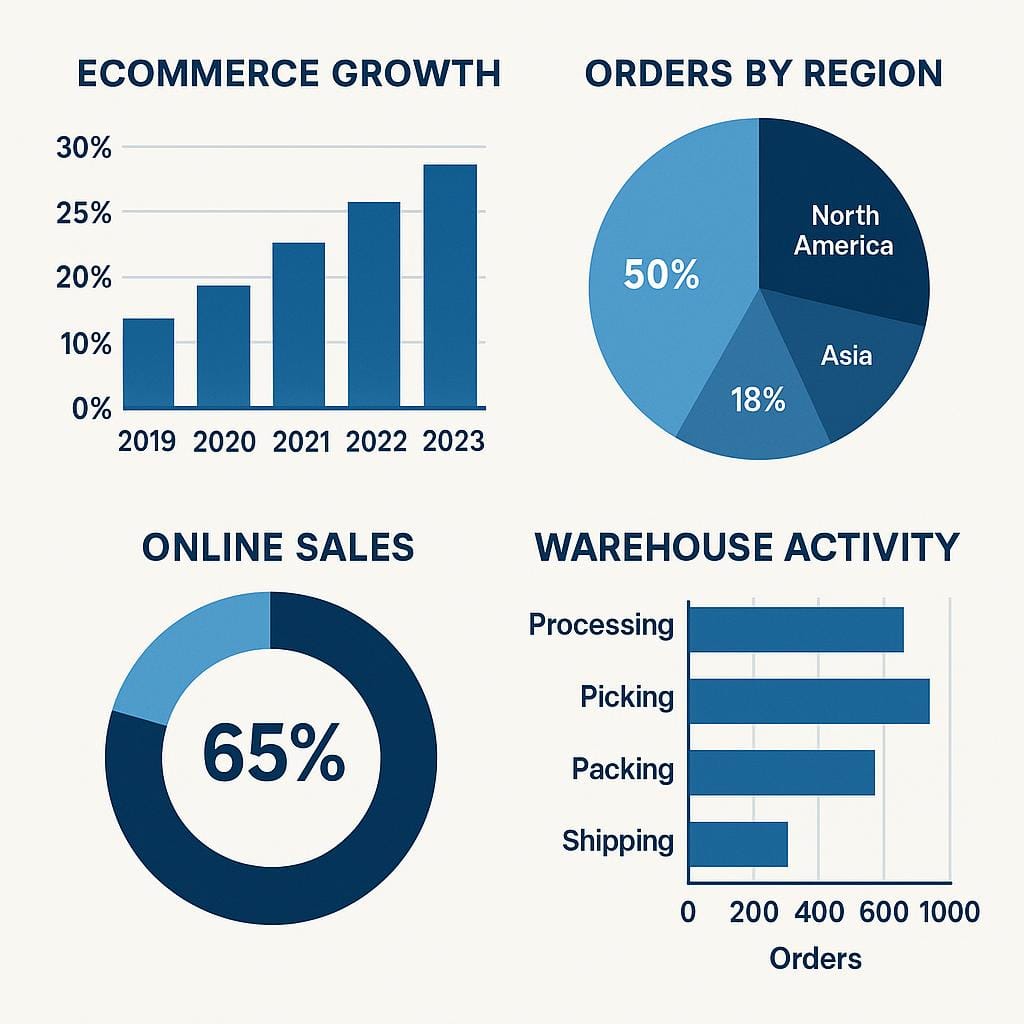
The impact of e-commerce growth on industrial real estate investment remains profound. In Q4 2024, e-commerce sales accelerated by 9.4% year-over-year, outpacing the full-year growth rate of 8.0%. This surge, fueled by renewed leasing activity from major players like Amazon, continues to underpin warehouse and logistics demand. However, the sector faces challenges:
- Inventory-to-sales ratios remain approximately 10% below pre-COVID levels, limiting the immediate upside for new warehouse demand.
- Real retail sales (excluding auto, gas, and restaurants) have been flat since 2021, signaling a plateau in goods consumption.
- Import volumes at major U.S. seaports surged 14% in Q4 2024, driven by tariff concerns and labor negotiations, temporarily boosting demand for coastal logistics facilities.
Despite these headwinds, the long-term trajectory for e-commerce-driven industrial demand remains positive. As real retail sales recover and inventory levels normalize, the sector is poised for a rebound in absorption and rental growth. Third-party logistics (3PL) providers, particularly those with Asian supply chain connections, are actively expanding, further supporting the sector’s outlook.
REIT Performance 2025: Key Metrics and Investor Sentiment
REIT performance in 2025 reflects the sector’s transition to a more mature growth phase. The average forward net operating income (NOI) growth for industrial REITs is projected at ~5% for 2025/26, down from the 8% highs of recent years. Cap rates for industrial assets have stabilized around 5.0%, with some forecasts suggesting a gradual rise as interest rates remain elevated. Notable financial highlights include:
- Industrial REIT average occupancy at 96.5% in Q4 2024, with a projected 100 basis point decline in 2025.
- Market rent and occupancy combined (M-RevPAF) forecast: -1% in 2025, +4% in 2026/27.
- Asset values up 1% over the last quarter; REIT net asset value (NAV) estimates up 3% on average (range: -4% for Rexford to +7% for STAG).
- FFO (Funds From Operations) growth expected at ~6% in 2025, accelerating to ~8% in 2026, then moderating thereafter.
Investor sentiment is characterized by disciplined optimism. While long-term fundamentals—such as e-commerce expansion and supply chain reconfiguration—remain intact, there is a clear shift toward selective, risk-adjusted investment strategies. Key players like EastGroup (Sun Belt focus) are forecasted to outperform on NOI growth, while Rexford (Southern California) faces challenges due to aggressive acquisitions at peak rents and higher development risk.
Submarket Performance Analysis: Top Submarkets for Industrial Real Estate Investment 2025
Analyzing top submarkets for industrial real estate investment in 2025 reveals both opportunities and risks. Critical markets include:
- Austin & Dallas: High supply pipelines and strong demand, but also elevated risk of short-term oversupply.
- Inland Empire: Facing higher vacancy (8.5%) and slower recovery due to speculative development, but remains a long-term logistics hub.
- Coastal Markets: Temporary headwinds in rent growth are expected to give way to outperformance from 2026 onward, as barriers to entry and port access support long-term value.
- Sun Belt Markets: EastGroup’s shallow-bay portfolio continues to deliver stable returns, benefiting from population growth and diversified tenant bases.
Conversely, markets such as Denver, Las Vegas, Phoenix, and San Francisco exhibit greater supply/demand imbalances, warranting caution. Rexford’s Southern California portfolio, with only 13% of its development pipeline pre-leased, exemplifies the risks associated with aggressive expansion in maturing markets. In contrast, EastGroup and Terreno (coastal infill) are better positioned for steady rent and NOI growth.
Supply Chain Resilience Strategies: Industrial Real Estate Investment Strategies for High Returns
Industrial real estate investment strategies for high returns in 2025 require a disciplined, selective approach. With valuations remaining elevated relative to other commercial property types, investors are advised to:
- Focus on markets with healthy supply-demand fundamentals and high barriers to entry.
- Prioritize assets with strong tenant covenants and long-term leases, especially in logistics and e-commerce corridors.
- Monitor development pipelines closely—ground-up development remains viable only in select submarkets with proven demand.
- Adopt a flexible capital allocation strategy, balancing core acquisitions with opportunistic plays in emerging submarkets.
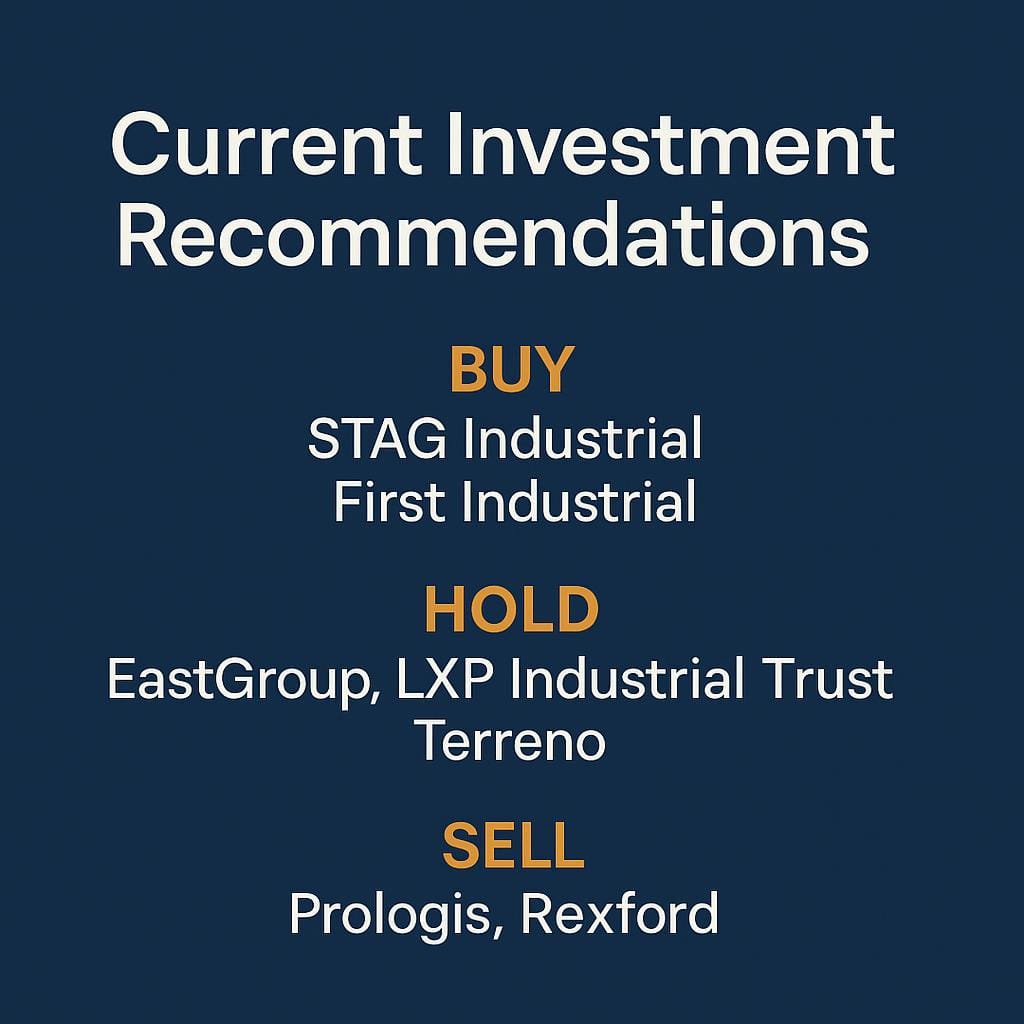
Current investment recommendations reflect this cautious optimism: BUY – STAG Industrial and First Industrial; HOLD – EastGroup, LXP Industrial Trust, Terreno; SELL – Prologis, Rexford. Balance sheets across the sector remain strong, with average leverage at 5.1x debt/EBITDA and ample liquidity. However, net external growth is expected to slow in 2025 due to less favorable capital costs and a more competitive transaction environment.
Conclusion: Leveraging Investment Opportunities in a Changing Landscape
The industrial real estate sector stands at a crossroads, offering compelling investment opportunities amid a landscape of evolving trends and moderated growth. As fundamentals stabilize and supply-demand dynamics come into balance, the sector’s long-term prospects remain attractive—particularly for investors who can identify resilient submarkets and adapt strategies to changing conditions. E-commerce, supply chain resilience, and disciplined capital deployment will continue to drive value creation. For institutional investors, private capital owners, and corporate occupiers alike, leveraging local expertise and market insight—such as that provided by Colliers Hawaii and the Hawaii Industrial Advisors team—will be essential for informed decision-making and sustained success in the years ahead.